AI for Risk Analysis in Engineering & Economics: Toward Integrated, Predictive Decision Making

In my previous post, I explored how AI is reshaping infrastructure risk modeling. (Link in comments.) Today, I want to extend that discussion to engineering economics.
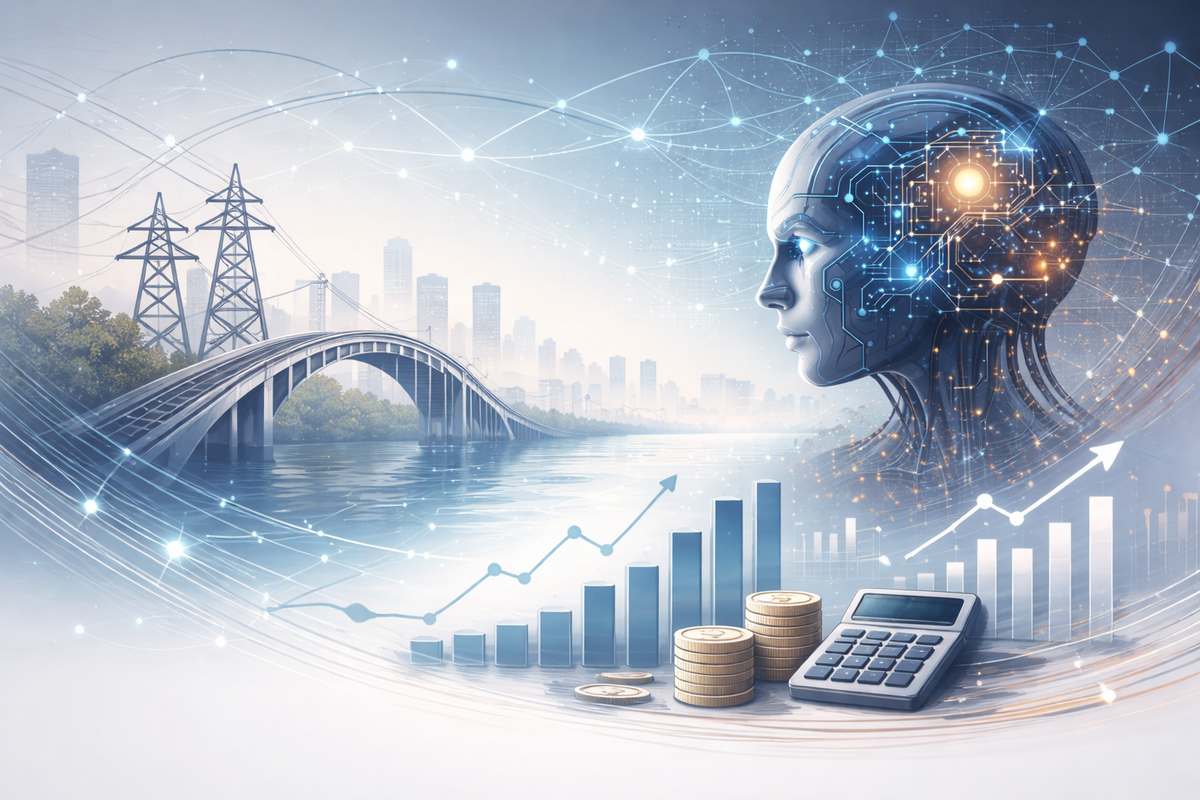
Infrastructure risk modeling is moving beyond static checklists and expert judgment. Today, artificial intelligence (AI) is enabling new quantitative methods that integrate technical risk with economic decision analysis, and that matters for both engineering and policy.
1. AI Enhances Quantitative Risk AssessmentMachine learning models can analyze large, heterogeneous datasets, uncovering patterns that traditional approaches miss. For example, AI has been used to predict project delays and cost overruns by synthesizing data from multiple sources, improving predictive accuracy.
📌 https://doi.org/10.1016/j.engappai.2025.110427.
2. Synergy Between AI & Risk Analysis TheoryAI isn’t just a tool, it’s interacting with risk analysis frameworks. Classical risk concepts like uncertainty quantification and knowledge structuring are being reimagined with AI methods, while risk theory provides essential validation frameworks for AI outputs. The use of AI agents will enable a this interactions be creating necessary feedback loops. 📌 https://www.sra.org/journal/artificial-intelligence-for-risk-analysis-and-the-risks-of-ai-part-1/
3. Integrated Decision Support in Engineering EconomicsAI now informs resource allocation, project planning, and resilience investment under economic constraints. Predictive analytics enable decision makers to assess tradeoffs between system performance and cost, a key capability for infrastructure planning. Additionally, risk aversion can be represented by applicable markets as provided in the sources below for wildfire risk economics.
📌 https://rjes.iq/index.php/rjes/article/view/167
📌 https://www.routledge.com/Risk-Analysis-in-Engineering-and-Economics/Ayyub/p/book/9781032918006
📌 https://ascelibrary.org/doi/10.1061/AJRUA6.RUENG-1254
4. Trustworthy & Governed AI ModelsThe value of AI in risk contexts depends on governance. Emerging frameworks emphasizing transparency, interpretability, and accountability are essential when models influence high-stakes infrastructure decisions.
📌 https://arxiv.org/pdf/2512.08723
The critical insight:When AI enhances both engineering risk models and economic decision frameworks, we move closer to predictive, transparent, and actionable decision support, rather than opaque black boxes.
Inviting your feedback:
➡️ How have you combined engineering risk assessments with economic decision models using AI?
➡️ What challenges remain in ensuring interpretability and trustworthiness?Looking forward to your thoughts