AI + Infrastructure Risk: From Static Models to Predictive Intelligence

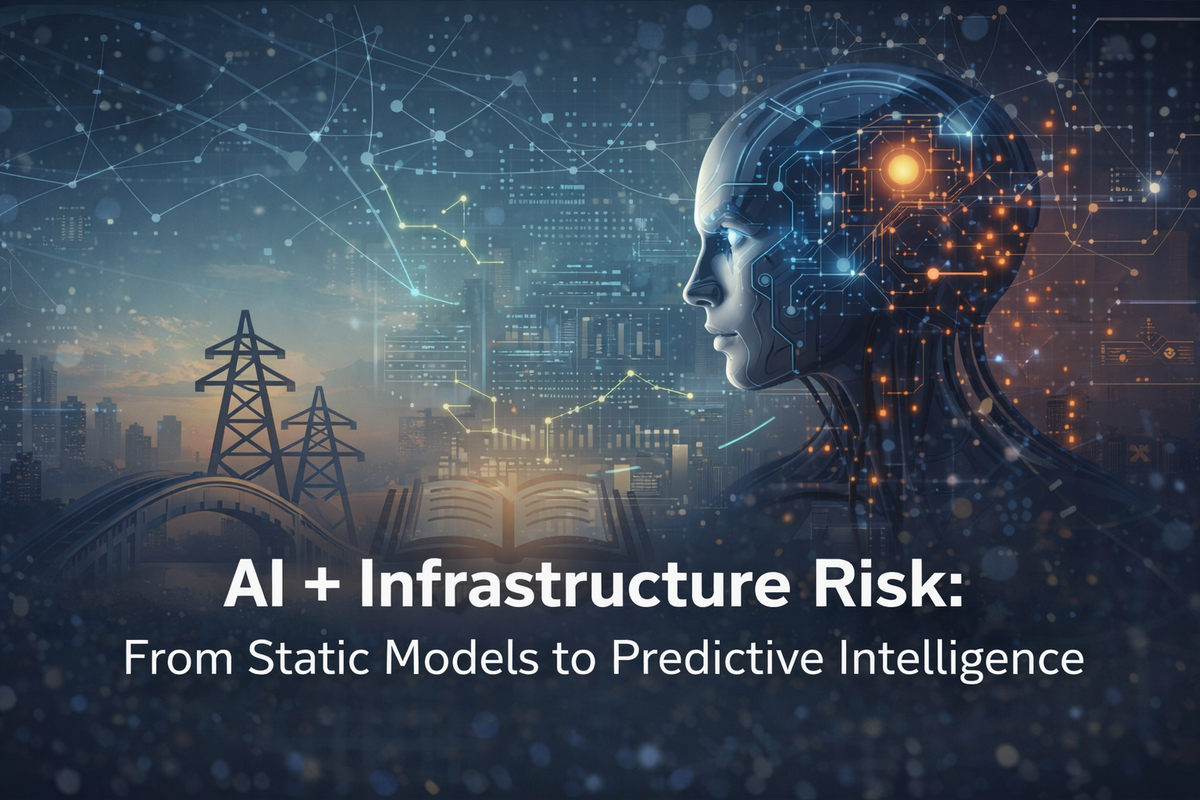
For decades, infrastructure risk modeling has relied heavily on expert judgment, historical records, and structured qualitative matrices. That approach built the foundations of modern risk analysis. But it is no longer sufficient.
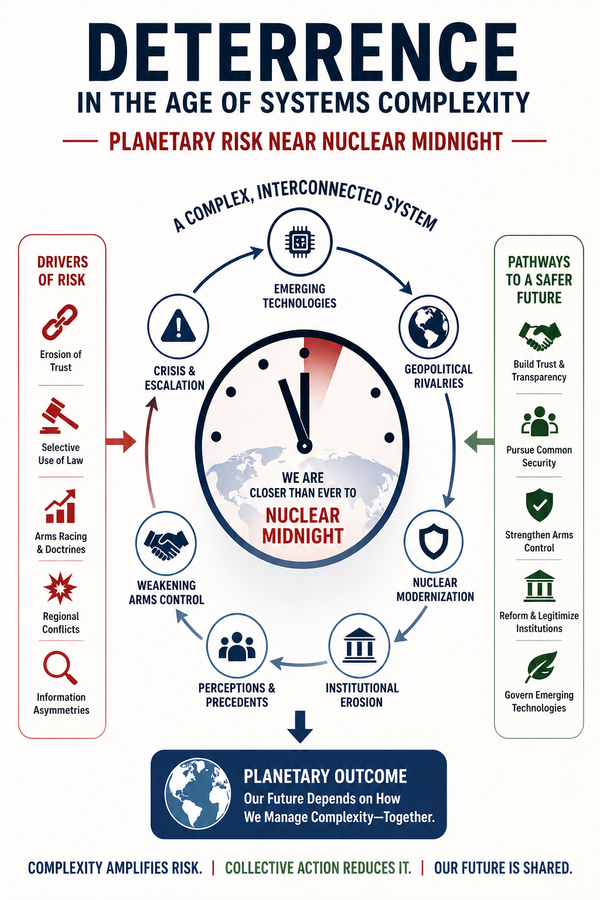
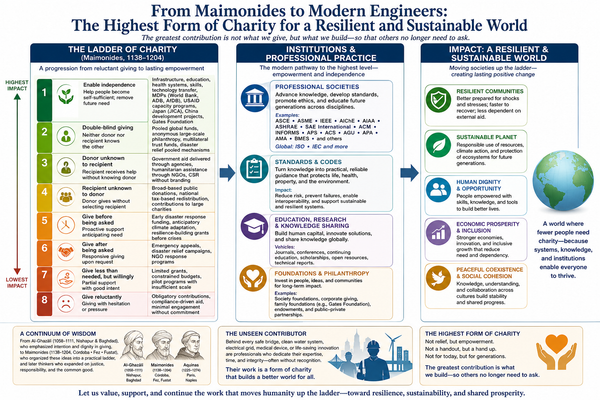
Today’s infrastructure systems are deeply interdependent, data-rich, and increasingly exposed to compound hazards, climate extremes, cyber-physical threats, supply chain disruptions, and AI-enabled operational complexity. AI is not replacing traditional risk theory. It is transforming how we operationalize it.
1. From Periodic Assessment to Continuous Risk MonitoringMachine learning models can now analyze large historical datasets alongside real-time operational streams. This enables early anomaly detection, predictive maintenance, and dynamic risk scoring. Instead of asking, “What could fail?” once a year, we can continuously estimate how risk is evolving. This is particularly relevant in transportation networks, energy grids, and water systems, where condition-based monitoring and predictive analytics are already demonstrating measurable resilience gains.
2. Modeling Systemic and Interdependent RiskTraditional risk models often treat components independently.AI techniques, particularly network-based learning and pattern recognition — allow us to model interactions among infrastructure components, revealing cascading vulnerabilities that static matrices may miss. This is critical as infrastructure failures increasingly propagate across sectors.
3. Quantifying Uncertainty More TransparentlyAI does not eliminate epistemic uncertainty. But hybrid approaches, combining probabilistic risk theory with machine learning, allow more structured updating of risk estimates as new data emerges. This strengthens, rather than weakens, the role of expert judgment. Experts move from subjective estimators to informed supervisors of model behavior.
4. The Governance ImperativeAs AI becomes embedded in infrastructure risk modeling, governance becomes essential. Frameworks such as the NIST AI Risk Management Framework emphasize transparency, reliability, and accountability, principles that are especially important when AI informs safety-critical infrastructure decisions.The future of infrastructure risk modeling will not be purely algorithmic.It will be hybrid: Human expertise guiding AI-driven analytical power. For researchers, this presents a clear opportunity: Develop integrated AI–risk methodologies; Improve interpretability in complex system models; Design validation protocols for AI-assisted resilience planning. The key question is not whether AI belongs in infrastructure risk modeling. It is how do we ensure it strengthens rigor, transparency, and decision quality rather than obscuring them?
I would be interested in hearing from colleagues:Where have you seen AI meaningfully improve risk modeling, and where does it still fall short?