Bushehr vs. Dimona in a War Zone: A Systems-Based Comparison of Nuclear Infrastructure Risks

Introduction
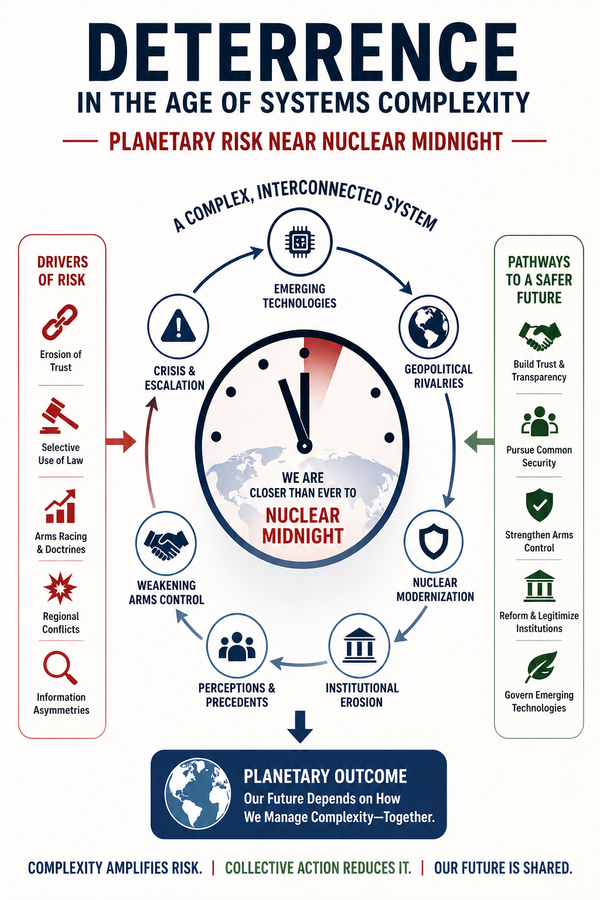
Public discussions of nuclear risk often focus on the facility itself, its design, containment, and potential release mechanisms. This perspective is incomplete. Risk must be understood as:
A function of the infrastructure system, environmental dynamics, and interdependencies.
This becomes particularly evident when comparing:
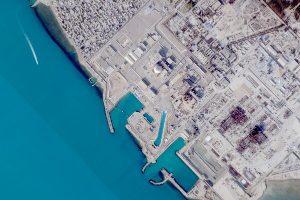
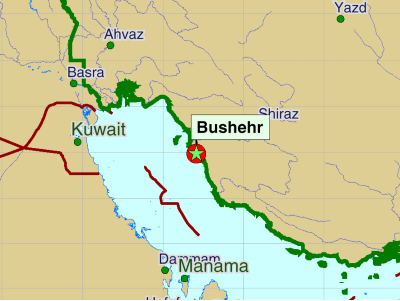
- Bushehr Nuclear Power Plant (Iran)
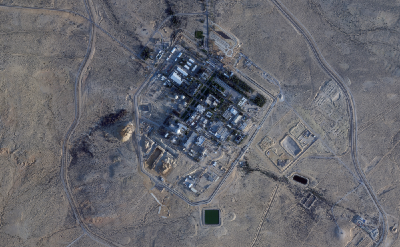
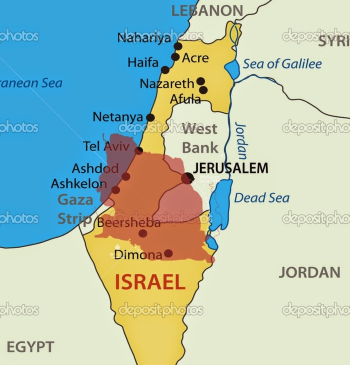
- Dimona Nuclear Facility (Israel)
Risk Is a System Property
Risk can be defined as:
The potential losses resulting from exposure to hazards or threat events
In infrastructure systems, consequences are shaped by:
• Physical environment
• Flow dynamics
• Coupled infrastructure systems
• Population exposure
• Recovery capability
The Bushehr Case: A Coupled Water–Energy System
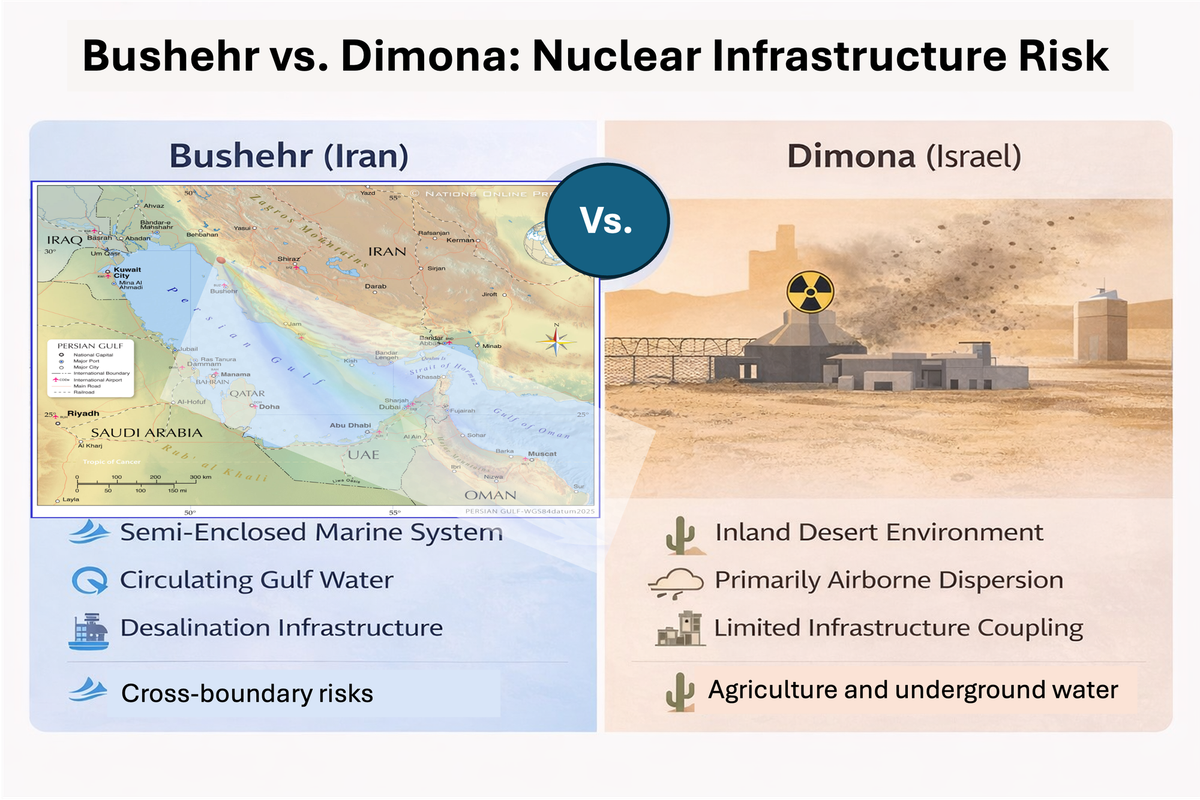
Bushehr is located on the Gulf. The Gulf has unique physical characteristics:
• Semi-enclosed basin
• Limited exchange through the Strait of Hormuz
• Counterclockwise circulation patterns
• High evaporation rates → elevated salinity
• Density-driven flow and stratification
As shown in Gulf circulation and dispersion studies:
• Contaminants can circulate for extended periods in a counterclockwise form
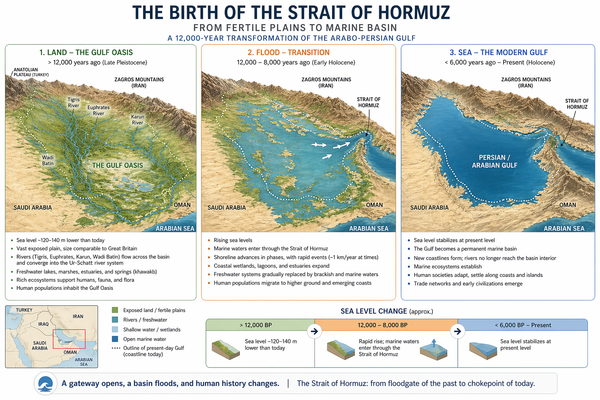
• Residence times can be long and most likely will not exit the Gulf due to the Gulf and Arabian Sea bathymetry making the Strait of Hormuz a hump that is attributed to the way the Gulf was formed thousands of years ago
• Seasonal variations affect dispersion pathways
This leads to a critical insight:
The dominant regional risk is not airborne dispersion; but marine contamination as was initially introduced in my presentation to Kuwait Foundation for the Advancement of Sciences (KFAS) in 2019 and subsequently refining the concept further working with Dr. Adnan Shihab-Eldin as presented at the 2019 International Seminars of Planetary Emergencies in Erice Italy.
Water–Energy Interdependence
The Gulf region depends heavily on desalination. From prior work, an energy incident can directly affect water suitability and quality, creating:
• Infrastructure coupling
• Cascading risk
• Cross-border impacts
A release into Gulf waters could:
• Affect desalination plants
• Disrupt water supply
• Trigger precautionary shutdowns
• Create economic and operational ripple effects
Policy Implications
- Emergency planning must include marine pathways
- Desalination infrastructure must be treated as critical risk nodes
- Regional coordination is essential
- Early warning and monitoring systems must integrate water and energy data
- Risk communication must distinguish between airborne vs systemic risks
The Dimona Case: A Different Risk Topology
The Dimona nuclear facility is located inland in a desert environment, which fundamentally alters its risk profile compared to coastal or marine-coupled facilities.
From environmental context, Dimona operates within:
- Arid desert conditions
- Sparse hydrological systems
- Low precipitation
- High temperatures and evaporation
- Dust-prone surface conditions
Unlike coastal nuclear facilities, Dimona is not coupled to a large, semi-enclosed water body. This removes one of the most significant pathways for regional-scale contamination.
Dominant Risk Pathways
The primary mechanisms of risk in the Dimona case are:
- Atmospheric Dispersion:
Wind-driven plume transport
Deposition patterns dependent on meteorological conditions
Directionality critical (localized exposure gradients) - Surface Deposition:
Particulates settling on soil and infrastructure
Potential contamination of localized land areas - Dust Resuspension:
Desert conditions increase likelihood of re-mobilization
Secondary exposure pathways via airborne dust
Absence of Marine Coupling
A defining feature of Dimona’s risk profile is the absence of marine interaction:
- No enclosed basin trapping contaminants
- No regional circulation system
- No large-scale water-mediated dispersion
This significantly limits:
- Cross-border systemic risk
- Long-duration environmental circulation
- Infrastructure Dependencies
Unlike the Gulf region, where water infrastructure is tightly coupled to energy systems, Dimona’s surrounding systems are:
- More localized
- Less dependent on desalination
- Less vulnerable to marine contamination
However, risks remain in:
- Local population exposure
- Land-use disruption
- Agricultural or ecological impacts (depending on dispersion)
Persistence vs Scale
Dimona risk can be characterized as:
- Lower systemic reach
- Higher localization
- Potential persistence via dust and surface deposition
This contrasts with Bushehr, where:
- Scale is larger (multi-country)
- Persistence is driven by water circulation
- Impact is infrastructure-coupled
Comparative Insight
The comparison illustrates a key systems principle:
Risk is shaped by environmental coupling, not just hazard magnitude.
Bushehr → water-energy coupled system → regional risk amplification
Dimona → land-based system → localized risk containment
|
Dimension |
Bushehr |
Dimona |
|
System type |
Coupled water–energy system |
Land-based system |
|
Dispersion pathways |
Air + marine |
Primarily air |
|
Regional impact |
High (water infrastructure) |
Moderate (localized) |
|
Persistence |
Potentially long (Gulf circulation) |
Shorter |
|
Key risk driver |
Marine contamination |
Airborne exposure |
Why This Matters
Risk assessment must move beyond:
• Infrastructure asset-level analysis
to
• System-level modeling
A typical risk frameworks includes the following primary components:
• Hazards
• Exposure
• Consequences
• Interactions
These components are considered holistically using probabilistic methods, economic valuation, and considerations for risk aversion in decision analysis as provided by Ayyub in his textbook on Risk Analysis in Engineering and Economics (2014).
Planning Implications
For Dimona-type systems:
• Focus on atmospheric modeling
• Land contamination management
• Dust control strategies
• Local evacuation and containment planning
For Bushehr-type systems:
• Focus on marine pathways
• Regional coordination
• Water infrastructure resilience
Conclusion
The comparison of Bushehr and Dimona demonstrates a broader principle:
- Infrastructure risk is not defined by the facility alone; but by the system in which it operates.
- In the Gulf, that system is deeply interconnected. Understanding that system is essential for resilience.
Credits
• Conceptual plume and scenario discussion adapted from Adnan Shihab-Eldin
• Gulf risk analysis and modeling based on Ayyub (2019) supported by KFAS