A Settlement Payment, an Unsettled Question: Who Sustains the Knowledge Behind AI?
Receiving an Anthropic settlement payment raises a larger question: how can AI’s commercial success sustain the authors and institutions behind reliable knowledge?


Reflections on the Anthropic copyright settlement, the value of authorship, and the future of our knowledge institutions
Bilal M. Ayyub | November 26, 2026
Today, I received part of the Anthropic copyright settlement associated with several of my books. The payment brought mixed feelings: appreciation that authors’ interests had been represented, alongside unease about what this moment means for a lifetime of intellectual work.
A textbook carries years of research, teaching, professional practice, revision, and judgment. Its pages reflect decisions about what matters, how ideas connect, where methods fail, and what a reader needs to understand before applying them. Receiving a modest payment in connection with these works invites a question that extends well beyond my own books: how should the people who develop reliable knowledge participate in the value generated when AI draws upon it?
The Scale of the Settlement and the Scale of a Career
The settlement in Bartz v. Anthropic establishes a $1.5 billion fund, plus specified interest. That is a substantial legal recovery. At the level of an individual work, however, the Authors Guild reports an initial distribution of approximately $2,203.56 per work, representing about 70 percent of the award. A work’s payment must then be allocated among its entitled rightsholders, which, for my books, include publishers and co-authors. [1–3]
The distinction between an initial installment and the total recovery matters. So does the distinction between a finite settlement paid in installments and a recurring royalty linked to continuing commercial activity.
My unease concerns that second distinction. The amount reaching an individual author feels small beside the years required to develop a serious textbook and the possibility that knowledge drawn from such works may contribute to commercial systems for years to come. This comparison expresses a concern about value and institutional design; it does not establish what any particular book contributed to a model’s revenues.
What Has Actually Been Settled?
It would be inaccurate to describe this payment as selling my intellectual career to AI forever. The settlement releases specified past claims involving listed works; it does not provide a license for future copying or training, and claims involving model outputs are excluded from the release. [1]
The legal history also requires care. In June 2025, the district court held that the training uses before it qualified as fair use, while distinguishing those uses from building a library with pirated copies. The settlement followed the dispute over the latter conduct. It is not a general judicial determination that all AI training requires royalties. [4]
These distinctions sharpen the larger question. A settlement can resolve particular legal claims without establishing an adequate economic relationship between knowledge creators and the enterprises that benefit from their work.
Knowledge as Intellectual Infrastructure
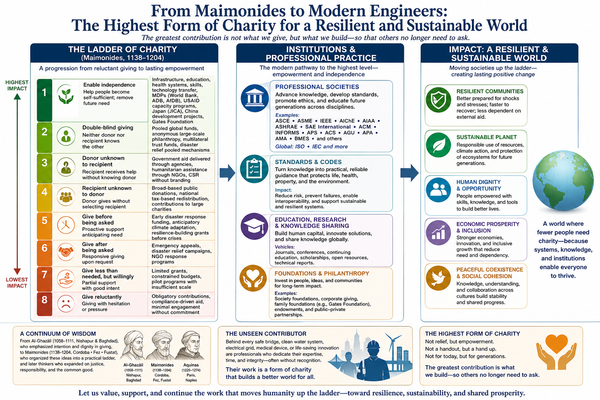
From an engineering perspective, I see professional knowledge as infrastructure. Textbooks, research papers, standards, and carefully developed methods support decisions much as physical networks support movement, communication, and essential services.
Their reliability requires maintenance. Evidence changes. Errors need correction. Methods require validation. New generations must learn enough to question established practice and improve it.
AI can make this infrastructure more accessible and useful. It can also change how people encounter it. A reader who once sought a textbook may now begin with a generated explanation. Whether that encounter leads back to an authoritative source, replaces a purchase, or stimulates further learning will vary. The possibility of displacement deserves investigation alongside the benefits of broader access.
The systems question is whether the resulting economic arrangements sustain the institutions and people responsible for producing the next generation of dependable knowledge.
Sharing Knowledge and Sharing Its Value
I wrote my books to be used. An author’s satisfaction includes seeing ideas help students, colleagues, and practitioners make better decisions. AI’s capacity to extend that reach is a reason for optimism.
Yet access, acknowledgment, and compensation serve different purposes. Access enables learning. Acknowledgment preserves intellectual lineage and helps readers assess authority. Compensation supports the time and effort needed to create and maintain substantial work.
Authors also inherit an enormous intellectual debt. Our books build on prior generations, public investment, universities, professional communities, and collaboration. AI adds further contributions through software, computing, engineering, and deployment. Fair arrangements should recognize these complementary contributions.
Copyright protects particular expression rather than ownership of facts or ideas. My argument for a better economic framework should not become a claim to own knowledge itself. Its purpose is to sustain the human work through which knowledge becomes organized, tested, teachable, and trustworthy.
A Continuing Relationship with Continuing Value
I believe we should develop compensation arrangements that connect relevant commercial AI activity to continuing support for creators. Where particular works are retrieved, reproduced, or supplied under license, usage-based payment can provide a direct connection. Where contributions are dispersed across training, collective arrangements may be more practical than attempting to assign every generated answer to individual books.
One possible approach is a negotiated share of relevant subscription, API, or enterprise revenues paid into independently governed licensing pools. Distribution could combine documented inclusion of works, measurable uses where available, and transparent allocation rules. Such a system would require audits, affordable administration, and a meaningful author voice in negotiations and distributions.
This is a proposal for future agreements and policy, rather than a description of an entitlement established by this settlement. It also requires careful design: excessive transaction costs or barriers to entry could restrict research, educational access, and smaller AI developers while strengthening the largest platforms.
The governing principle should be proportionality. Where commercial value continues to depend on licensed intellectual contributions, the relationship should allow compensation to continue with it. Per-use payments can be part of that relationship; they need not be its only mechanism.
A Responsibility Across Professions and Generations
Professional societies, universities, publishers, libraries, and author organizations should help shape this framework. Their responsibilities include transparent AI clauses in contracts, clear reporting, fair author allocations, protection of legitimate research and education, and investment in the renewal of knowledge.
The issue reaches beyond established authors. A senior scholar may continue writing because of professional commitment. A younger researcher deciding whether to spend years developing a rigorous textbook faces a different calculation. If institutions reward the rapid recombination of existing knowledge more reliably than its patient creation and correction, we should expect consequences for what gets produced.
Those consequences would be society-wide. Engineering, medicine, science, law, and public policy depend on sources that can be examined, challenged, and updated. An efficient interface cannot by itself ensure that those sources will continue to exist.
What the Payment Leaves Open
I welcome recognition of authors’ interests and the work required to secure this settlement. I also remain unsettled by the distance between a finite payment and the potentially enduring role of the intellectual work behind it.
That feeling is an invitation to think more carefully about the future we are financing. AI offers extraordinary opportunities to extend human capability. Realizing them responsibly requires attention to the people and institutions that make reliable knowledge possible.
The payment arrived today. The responsibility to sustain the knowledge behind AI continues.
Sources
- Official settlement FAQs, particularly Questions 11 and 15.
- Official settlement website: payment installments and current status.
- The Authors Guild, “Anthropic Settlement Update: Payments Start November 23,” updated November 23, 2026.
- U.S. Copyright Office, summary of Bartz v. Anthropic PBC, 787 F. Supp. 3d 1007 (N.D. Cal. 2025).